
Best Rodent Proofing Materials for Lasting Repairs

A rat does not need a dramatic hole to get inside. Mice can squeeze through openings about the width of a pencil, while rats can exploit gaps around pipes, foundation vents, garage doors, and damaged siding. The best rodent proofing materials do more than cover a visible gap. They resist gnawing, fit the structure, and stay secure through Bay Area moisture, temperature changes, and normal building movement.
That last part matters. A quick application of foam may make a hole disappear for a few weeks, but rodents often chew through it or find the loose edge beside it. Lasting rodent exclusion requires the right material at each entry point, installed after a careful inspection of the property.
The Best Rodent Proofing Materials for Common Entry Points
No single product solves every rodent problem. A roofline opening needs a different repair than a foundation gap or a utility penetration. The most effective work combines gnaw-resistant barriers with proper fasteners, sealing compounds, and repairs to the surrounding structure.
Galvanized hardware cloth for vents and larger openings
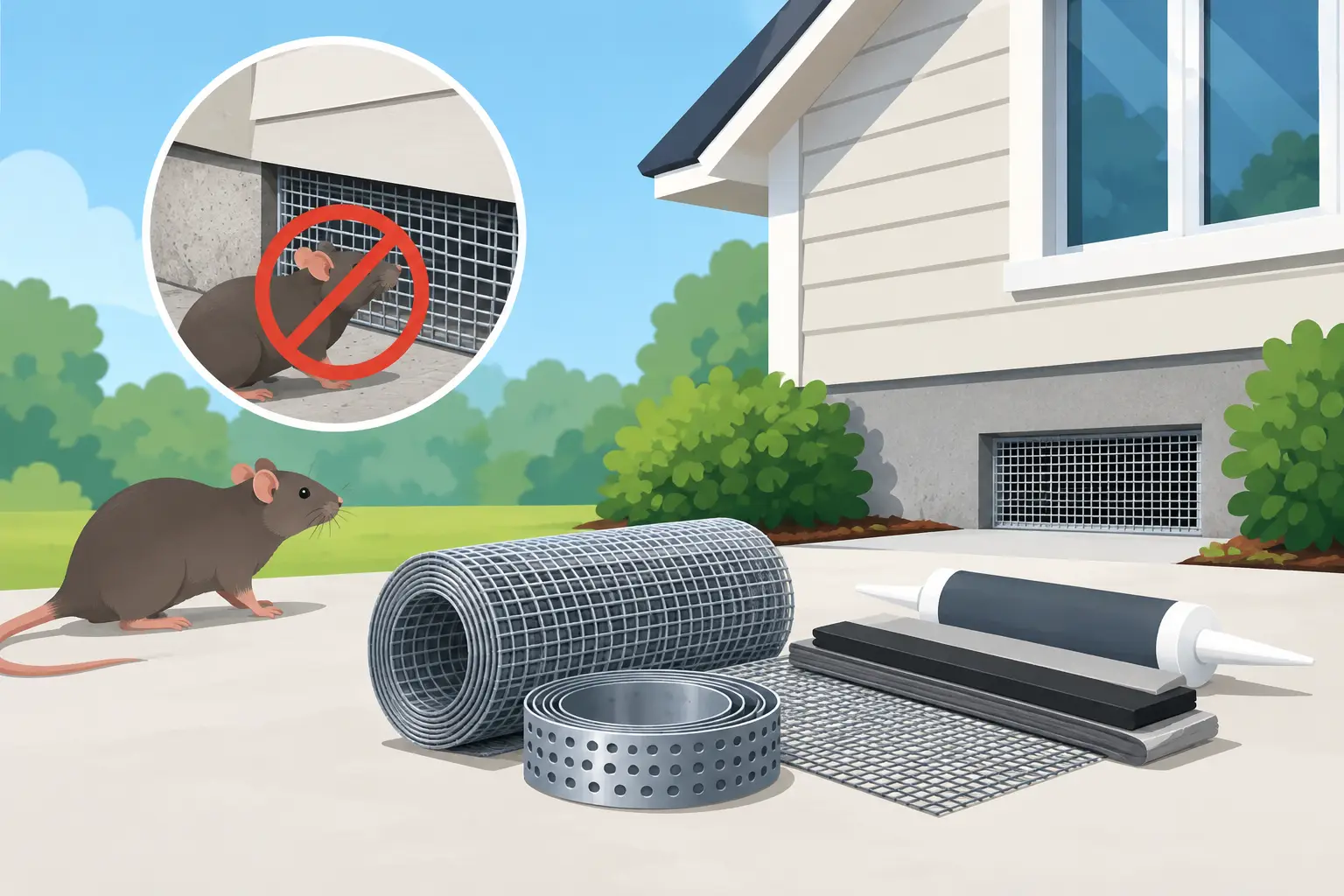
Galvanized hardware cloth is one of the most useful materials for covering crawl-space vents, foundation vents, attic vents, and other larger openings that still need airflow. For rodent exclusion, 1/4-inch welded mesh is usually the right choice. Larger mesh can allow mice through, and lightweight window screen is too easy for rodents to tear or chew.
The mesh must be securely fastened to solid framing or masonry. Simply pressing it into place, stapling it to weak wood, or attaching it over a deteriorated vent cover creates an easy failure point. On coastal or consistently damp properties, stainless steel mesh may be worth the added cost because it offers better corrosion resistance.
Vent protection needs judgment. A vent that serves essential building airflow cannot be blocked outright. Dryer vents require particular care: do not cover them with mesh, which can collect lint and create a fire hazard. Use a rodent-resistant vent termination designed to maintain safe exhaust airflow instead.
Sheet metal and flashing for gnaw-prone gaps
Sheet metal and galvanized flashing provide a durable barrier where rats and mice are likely to gnaw. They work especially well around garage door corners, damaged siding, roof returns, wall penetrations, and gaps where wood meets concrete.
The key is overlap and attachment. A small metal patch can be pushed aside if it is not anchored with appropriate screws or fasteners. It should extend beyond the damaged area, sit flush against the surface, and be integrated with the existing siding, trim, or flashing system. Sharp exposed edges should be folded or finished safely.
Metal is often the best choice for an opening that has already been chewed several times. It costs more than a tube of sealant, but it addresses the reason simple sealant kept failing.
Copper mesh or stainless steel wool for irregular gaps
Utility lines create awkward openings. Pipes, conduits, cable lines, and HVAC penetrations often leave uneven gaps that are difficult to close with rigid material alone. Copper mesh and stainless steel wool are useful for packing these spaces before sealing them with an exterior-grade compound or covering them with a fitted metal plate.
Avoid ordinary steel wool as a long-term exterior fix. It rusts, breaks down, and may stain surrounding surfaces. Copper mesh does not rust, while stainless steel wool holds up well in demanding locations. Neither should be treated as a standalone solution for a large hole. Rodents may pull loose material out unless it is packed correctly and secured behind a durable finish.
Mortar, hydraulic cement, and concrete repair products
For cracks, voids, and utility gaps in masonry foundations, mortar-based repairs are usually more dependable than foam or caulk alone. Hydraulic cement is particularly useful where a small foundation opening needs a hard, durable fill. Mortar can rebuild missing sections around brick, block, or concrete.
These materials need a clean, stable surface. Loose or crumbling concrete should be removed first, and wide structural cracks may require a more complete repair than a surface patch. If water intrusion, settling, or damaged drainage is contributing to the opening, sealing the visible gap without addressing that condition can lead to repeat damage.
Door sweeps and reinforced weatherstripping
Rodents frequently enter through the bottom corners of garage doors, exterior service doors, and doors leading from garages into homes or businesses. A quality door sweep with a reinforced metal retainer can close a gap that mice use every night. For garage doors, durable rubber bottom seals and side seals should sit tightly against the slab and tracks without interfering with door operation.
Soft, worn weatherstripping is not rodent proof. If the material is torn, compressed, or separated from the frame, rodents can exploit the gap. Look for daylight around closed doors, especially at the lower corners. That light is often a clear sign that exclusion work is needed.
Materials That Help, but Should Not Stand Alone
Expanding foam, silicone caulk, and weatherproof sealant all have a role in rodent proofing. They finish small seams, stop drafts, and help hold a properly installed barrier in place. They are not reliable rodent barriers by themselves.
Foam is especially misunderstood. Standard expanding foam can fill an opening quickly, but rats and mice can chew through it. Use it as a backing material behind metal mesh, flashing, or another gnaw-resistant barrier, not as the main defense. The same rule applies to caulk around a large pipe gap. If the opening is wide enough to admit a mouse, pack and reinforce it first.
Plastic vent covers, lightweight screen, wood patches, and loose insulation are also poor choices for high-pressure areas. They may look acceptable after installation but can fail under chewing, weather exposure, or building movement.
Match the Material to the Entry Route
A professional exclusion inspection is valuable because the best material depends on what the opening does and where it is located. Technicians inspect foundation lines, crawl spaces, attic vents, roof edges, garage doors, utility penetrations, HVAC lines, chimneys, and gaps behind exterior fixtures. They also look for droppings, rub marks, gnawing, nesting material, and travel paths that reveal whether rodents are actively using an opening.
For example, a crawl-space vent may need 1/4-inch hardware cloth secured to a sound frame. A gap around a gas line may need copper mesh, a durable sealant, and a metal escutcheon or cover plate. A broken roof vent may need replacement rather than a patch. An opening beneath siding may require flashing that directs water away while blocking rodent access.
The repair also has to respect the building system. Blocking a required vent, sealing over a combustion air opening, or restricting appliance exhaust can create more serious problems than the rodent gap itself. This is one reason exclusion is not just a matter of buying materials at a hardware store.
Do Not Seal Rodents Inside
Closing every opening before addressing active rodents can trap animals in walls, attics, or crawl spaces. That can lead to new interior damage, odors, and desperate attempts to chew out through another area of the property.
A better process begins with inspection and population control, followed by a planned exclusion sequence. Main entry points are secured at the right time, while one-way exit devices or monitored routes may be used where appropriate. Once activity has stopped, remaining access points can be permanently sealed. Contaminated insulation, damaged ductwork, nests, and droppings may then need remediation to restore the affected space.
For apartment buildings, restaurants, offices, and other commercial properties, the process often requires coordination across multiple units or shared utility areas. Sealing one suite will not solve a rodent issue if the animals are moving through common walls, basements, trash areas, or ceiling voids.
When a Professional Repair Makes Sense
DIY proofing can be reasonable for a clearly visible, small door gap or an intact vent frame that needs properly installed mesh. Call for professional help when you find repeated gnawing, droppings in an attic or crawl space, damaged insulation, noises in walls, multiple entry points, or gaps near electrical, plumbing, gas, and HVAC systems.
Rodent Busters Inc. approaches exclusion as part of a full repair plan, not a trapping-only visit. Trained technicians identify how rodents are getting in, recommend materials suited to each location, and address the damage that makes a property vulnerable.
The right proofing material is the one that holds up where rodents are actually entering. Start with a detailed inspection, repair the opening instead of hiding it, and give every vent, pipe gap, door edge, and foundation line the attention it needs before a small rodent problem becomes a larger property repair.


Comments